October 2026 · 4 min read
Mobile Food Pantries and Pop-Up Distributions in San Antonio
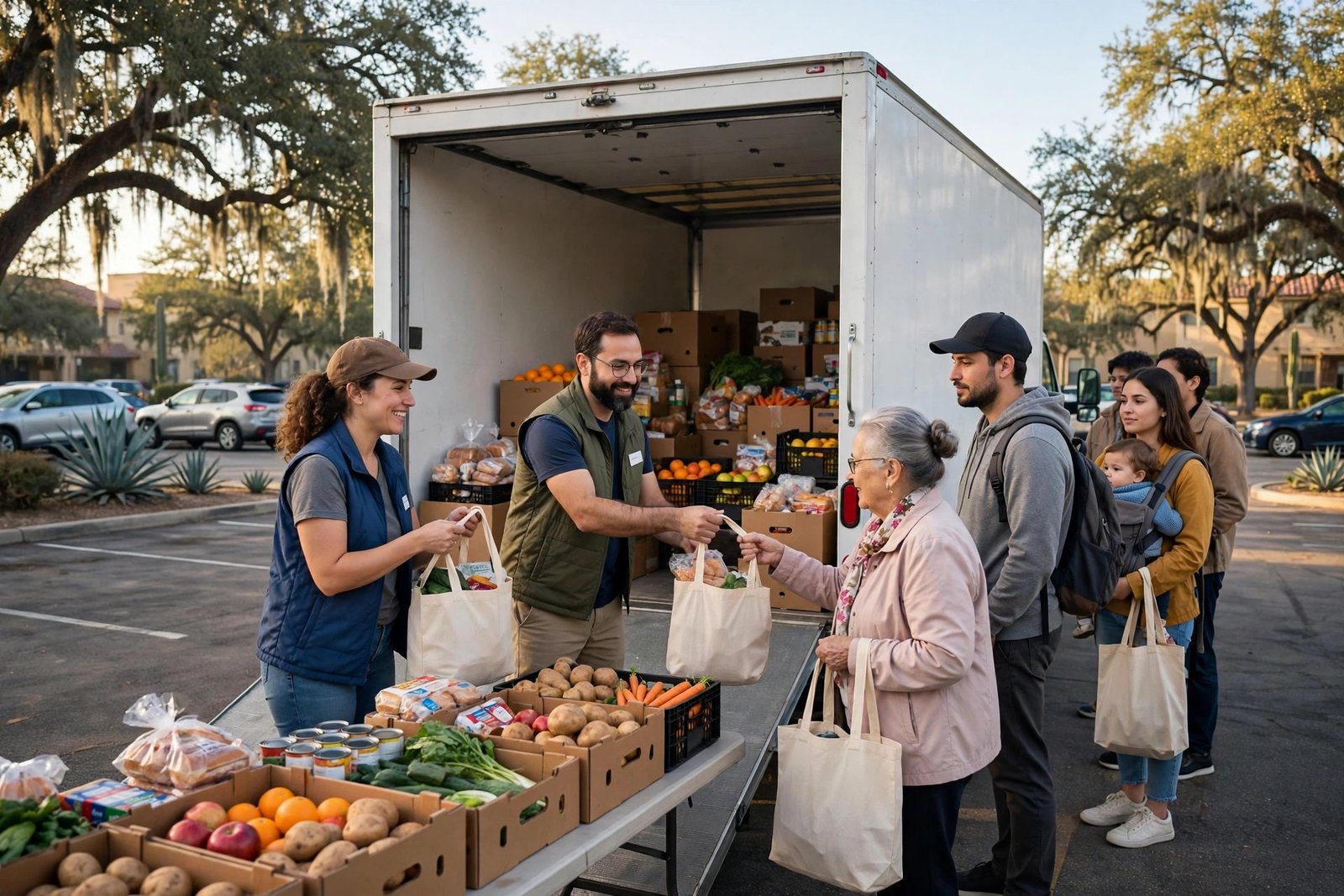
Not every food pantry has a building and a front door. Some of the best free groceries in San Antonio arrive on the back of a truck — a mobile food pantry that sets up in a parking lot for a few hours, hands out boxes and bags of food, and moves on. Add in pop-up distributions at churches, schools, and community centers, and there's almost always a distribution happening somewhere in the city. Here's how they work, and how to make the most of one.
How a mobile pantry works
It's beautifully simple. A truck loaded with groceries — often supplied through the San Antonio Food Bank network — pulls into a parking lot on a scheduled day. Volunteers set up folding tables, or they hand boxes straight off the truck bed. Neighbors line up, on foot or in cars depending on the site, and everyone goes home with groceries.
Distributions usually run a few hours, or until the food runs out. There's no appointment and no cost. You show up during the distribution window, you get food. Some sites have you stay in your car and pop the trunk; others are walk-up, with volunteers loading your bags. Either way, the whole thing is designed to move quickly and serve a lot of people.
What "pop-up" means
A pop-up distribution is a one-time or occasional event — often hosted by a church, a school, or a neighborhood group. Unlike a fixed pantry with regular weekly hours, a pop-up might happen monthly, seasonally, or as a single event, which makes them easy to miss and well worth seeking out.
The setup looks familiar: a parking lot, folding tables, volunteers, and a line of neighbors. Many pop-ups get announced through community groups and church bulletins. Our directory lists distributions with their dates, so you can spot them before they happen instead of hearing about them the day after.
Arrive early — the popular ones run out
Here's the honest truth about mobile distributions: the popular ones run out of food. A truck can only carry so much, and when word gets around, the line forms early. If a distribution is known to be generous, arriving at or before the start time makes a real difference in what you bring home.
You don't need to camp out — but don't plan on strolling in during the last half hour either. When the boxes are gone, they're gone. If you do arrive late and miss out, don't give up: check what's open right now, and you may find another option nearby.
What to bring
Bring something to carry your food in. A few sturdy grocery bags, a laundry basket, or a small cart will save you from juggling loose cans and produce across a parking lot. Distributions often hand out boxes, but not always — and the boxes run out too.
As for ID: most mobile distributions ask for nothing more than your name or ZIP code for their records. Bringing an ID doesn't hurt, but don't stay home because you don't have one. Nobody is checking paperwork at the back of a truck.
How they differ from fixed pantries
A fixed pantry — one of the 24 in our directory — has regular hours you can count on week after week. Mobile distributions trade that predictability for reach: they show up in neighborhoods that don't have a fixed pantry nearby, and a single truck can move an enormous amount of food in one afternoon.
The smart move is to use both. A fixed pantry covers your weekly staples; a mobile distribution is a great way to stock up when one rolls through your part of town. And because mobile events cluster around times people can actually get there, they're worth a regular glance at the schedule.
Tips for a great mobile pantry visit
- Confirm the date. Mobile events have specific dates, not just weekly hours. Double-check before you drive over.
- Go early. Lines form fast and trucks empty out. Early arrival means better selection.
- Bring bags or boxes. You'll be glad you did when the food starts coming your way.
- Bring a neighbor. Carpool, hold each other's spot in line, and share anything extra. That's what community looks like.
- Have a backup plan. If one distribution runs out, the open-now page shows what else is serving.
The truck comes to you
Mobile pantries exist because hunger doesn't only live next to a pantry building. They bring the food to the neighborhood — and on a good day, they bring the neighborhood out to the parking lot, too. Watch the schedule, show up early, and load up.
Find a mobile distribution near you
57 verified free-food spots across San Antonio — fixed pantries, mobile distributions, and hot meals. See what's coming up near you.